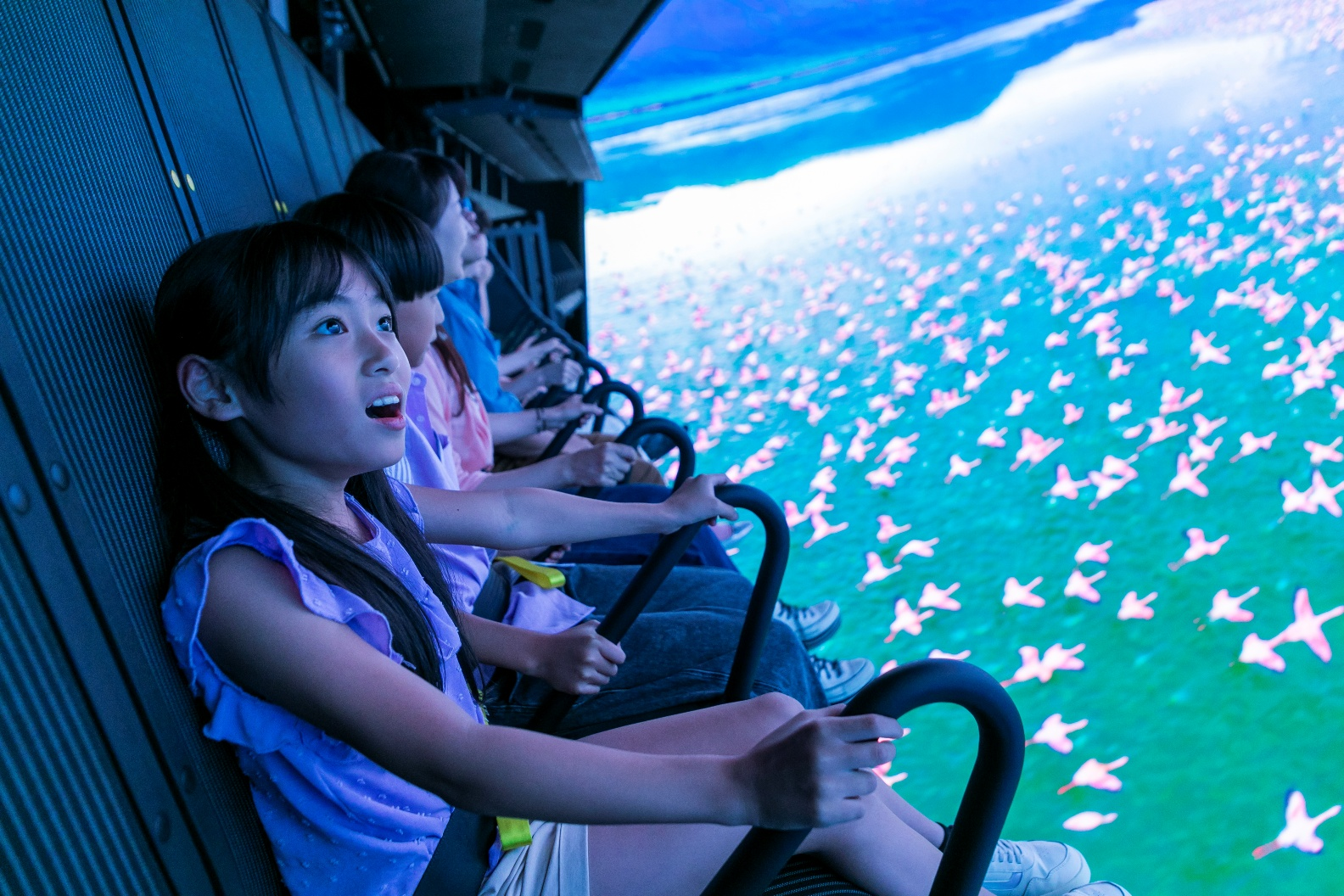
While a flying theatre ride and a 5D cinema are both categorized as immersive viewing equipment, they differ significantly in core positioning, experience logic, and hardware configuration. The former focuses on “flight simulation” to provide a “high-altitude immersive roaming experience,” while the latter emphasizes “multi-sensory interaction” with a focus on “close-up situational thrills.”
The following is a comprehensive comparison across three dimensions: Experience, Equipment, and Application.
The difference in experience stems from the core design logic, which dictates the user’s sensory focus:
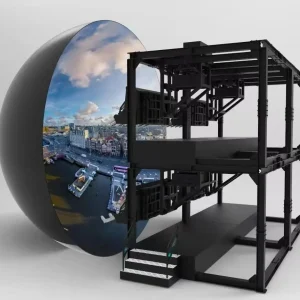
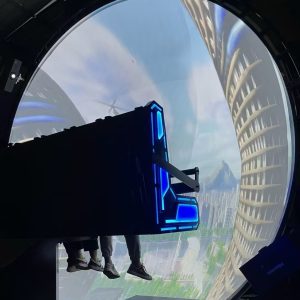
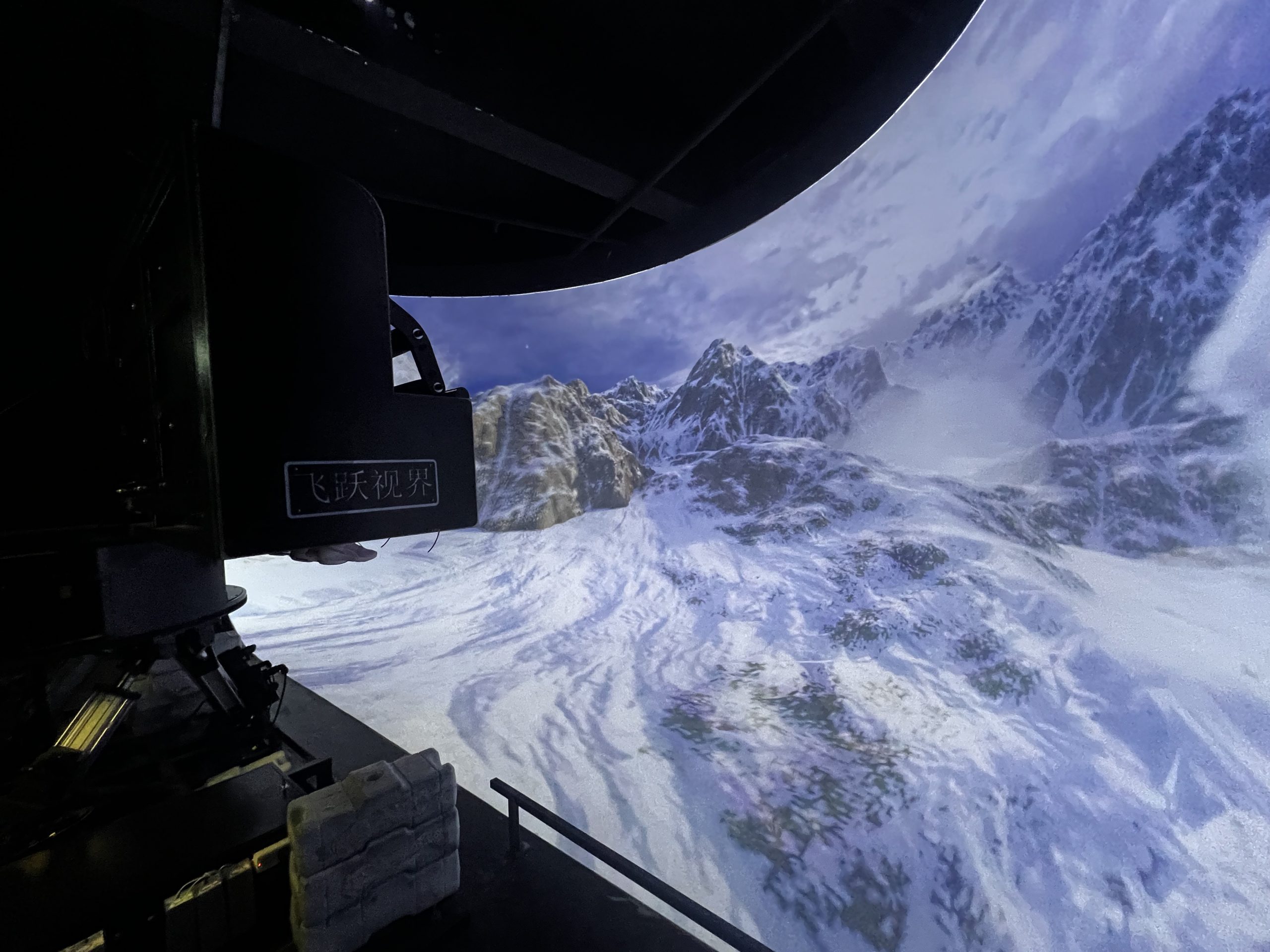
Perspective & Logic: Utilizing suspended seating + giant spherical/curved screens, the seats lift so that users’ feet hang mid-air. The field of vision is entirely enveloped by the screen, simulating a high-altitude view from a flying vehicle (like a plane or hot air balloon). For example, in Flying Over the Great Wall, users feel as if they are “skimming the battlements” or “soaring through mountain clouds.” The focus is on “moving aerial sightseeing.”
Sensory Focus: Primarily driven by the lifting, tilting, and diving of motion seats synchronized with the panoramic movement of the screen to enhance the realism of the flight path. Environmental effects (wind, scent) are secondary, acting as subtle enhancements (e.g., a valley breeze) rather than the main attraction.
Duration & Pace: Usually 8–15 minutes. The pace is smooth and continuous without jarring “sudden shocks.” It is suitable for all ages, focusing on the enjoyment of the roaming process.
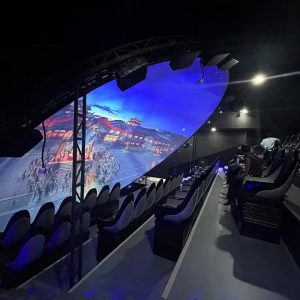
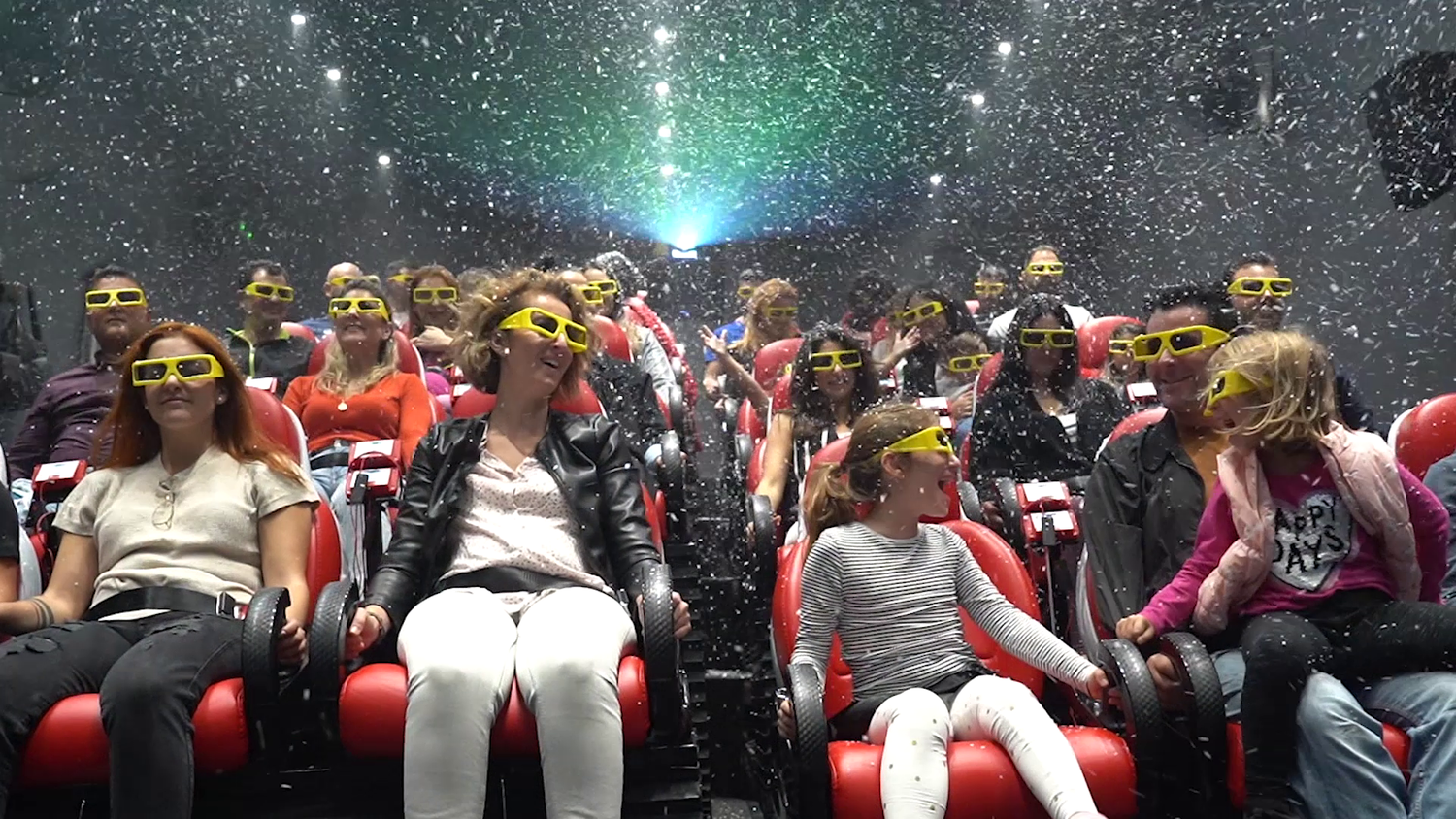
Perspective & Logic: Utilizing standard or small-scale motion seats + flat/curved screens, the seating position is similar to a traditional cinema. The focus is on “close-up situational details,” simulating being inside the scene. For example, in Dinosaur Crisis, users feel like they are standing next to a dinosaur, dodging attacks. The focus is on “interaction within a specific scene” (e.g., jungles or ruins).
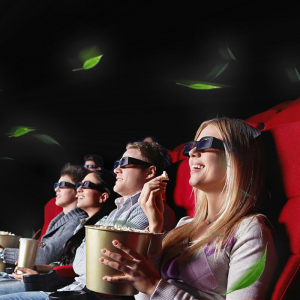
Sensory Focus: Centered on multi-sensory linkage. Beyond vibration and tilt, it incorporates “close-up effects”: water spray when a dinosaur “drools,” air blasts during explosions, or leg-ticklers to simulate insects crawling by. The goal is to make the user “enter the scene” rather than observe it.
The technical hardware distinguishes the two systems clearly:
| Dimension | Flying Theatre Ride | 5D Cinema |
| Core Experience Positioning | Simulates “flight,” emphasizing a sense of openness through high-altitude perspectives and free movement. It allows audiences to experience a “flight adventure away from the ground”. | Simulates “scene interaction,” emphasizing immersion by following the plot. It makes the audience feel like they are the “protagonist of the adventure”. |
| Seat Design | Suspended seating (feet hanging) with no bottom support. Single seat weight capacity is 50–150kg. Arranged in rows or matrices, with some equipped with safety bars. | Fixed motion seats (supported from the bottom), often in 4–6 person cabins. Some seats include effects like “leg ticklers” and “water spray” (e.g., simulating bugs or rain). |
| Screen & FOV | Ultra-large curved or spherical screens (15–50m). Covers a 120°–180° field of view. Visuals focus on “high-altitude overlooks” with a borderless feel. | Small to medium flat or curved screens (5–15m). Covers an 80°–120° field of view. Visuals focus on “ground perspectives” and plot details. |
| Motion System | 6-DOF (Degrees of Freedom) full-range motion (up/down, forward/back, left/right, pitch, roll, yaw). Focuses on flight actions like “lifting” and “diving” with large, fast movements. | 3–4 DOF basic motion (up/down, left/right, forward/back). Focuses on scene-based movements like “bumps” and “sways” (e.g., a bumpy car or swaying boat) with small movements. |
| Environmental Effects | Focused on “flight-related effects,” such as wind (airflow), mist (clouds), and scents (nature). Effects are synchronized with flight movements. | Focused on “plot-related effects,” such as water spray (rain), leg ticklers (insects), vibration (explosions), and smoke (fire). Effects are synchronized with plot points. |
| Film Content | 5–15 minutes long. Core themes are “sightseeing” and “exploration” without complex plots. Emphasizes visual impact (e.g., Flying Over Mountains, Space Roaming). | 3–8 minutes long. Core themes are “short stories” with clear protagonists and plots (e.g., Escaping Monsters, Treasure Hunt). Emphasizes plot tension. |
| Venue & Investment | High venue requirements: Ceiling height ≥5m, area 150–1000 m². Investment: 5M – 25M RMB. Suitable for large cultural tourism projects. | Low venue requirements: Ceiling height ≥3m, area 50–200 m². Investment: 300K – 3M RMB. Suitable for small commercial complexes or scenic spot facilities. |
| Target Audience | All age groups. Especially suitable for tourists seeking openness and excitement, including families and young people. | Primarily children and teenagers (plots are more attractive to younger groups). Suitable for parent-child families. |
Core Use: Acts as a “must-visit landmark attraction.” It amplifies the natural or cultural advantages of a destination—such as Soaring Over the Horizon at Shanghai Disneyland—allowing tourists to experience the full scale of a region quickly.
Site Requirements: Requires a ceiling height of 4 meters or more.
Target Audience: All-age groups, especially family tourists who prefer a premium, majestic experience over raw intensity.
Core Use: Serves as supplementary entertainment providing high-frequency, short-duration thrills. Often found in malls playing content like Crazy Racing, it satisfies the “fragmented entertainment demand” of shoppers.
Site Requirements: Can be installed in compact spaces with no complex modifications. Installation is fast (1–2 weeks), making it ideal for rapid ROI.
Target Audience: Primarily children and teenagers who enjoy interactive “gamified” content.
A flying theatre ride is no longer exclusive to massive theme parks; it can now be adapted for smaller commercial venues(FEC, Arcade center etc.). Essentially, a flying theatre ride allows users to “fly to see the world,” whereas a 5D cinema allows users to “step into a scene to interact.” The difference lies in the immersion logic: one pursues breadth of perspective, while the other pursues density of sensation.