
Is a Flying Theater Profitable? Detail ROI, and Payback Period Analysis
Investment Cost, ROI, and Payback Period of Small Dome Flying Theater Systems (2025 Global Market Analysis)
Over the past few years, the keyword “Flying Theater” has grown rapidly in global search trends. Investors, shopping mall operators, and entertainment entrepreneurs are increasingly asking:
- Is a flying theater profitable?
- How much does a flying theater cost?
- What is the ROI of a flying theater?
- What is the payback period for a small flying theater?
- Can a dome flying theater be installed inside a shopping mall?
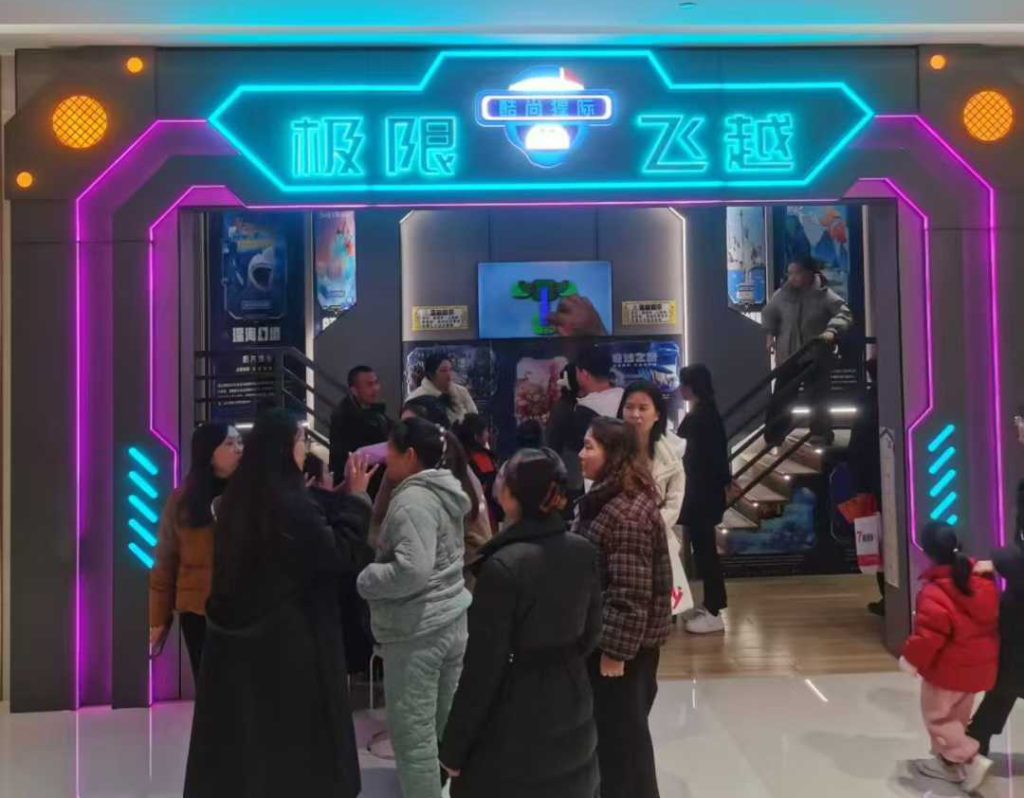
Since 2025, a major structural shift has occurred in the industry. Traditionally, flying theater systems were only feasible for large-scale theme parks due to their size and cost. However, with miniaturized structural upgrades introduced by manufacturers like Wehop Tech, flying theater systems can now be installed inside regular shopping malls and indoor amusement centers.
In the past, consumers had to visit high-ticket theme parks such as Disney or Universal Studios to experience premium flying attractions. Today, thanks to compact dome design and modular engineering, this high-end immersive experience is now accessible inside standard commercial retail spaces.
This shift significantly changes the investment logic.
Flying theaters are no longer exclusive, heavy-capital theme park attractions — they are now scalable, standardized, mall-compatible entertainment investment projects.
So when investors ask, “Is a flying theater profitable?”, the answer is no longer theoretical. It can be calculated.
What Is a Flying Theater and Why Is It Gaining Commercial Value?
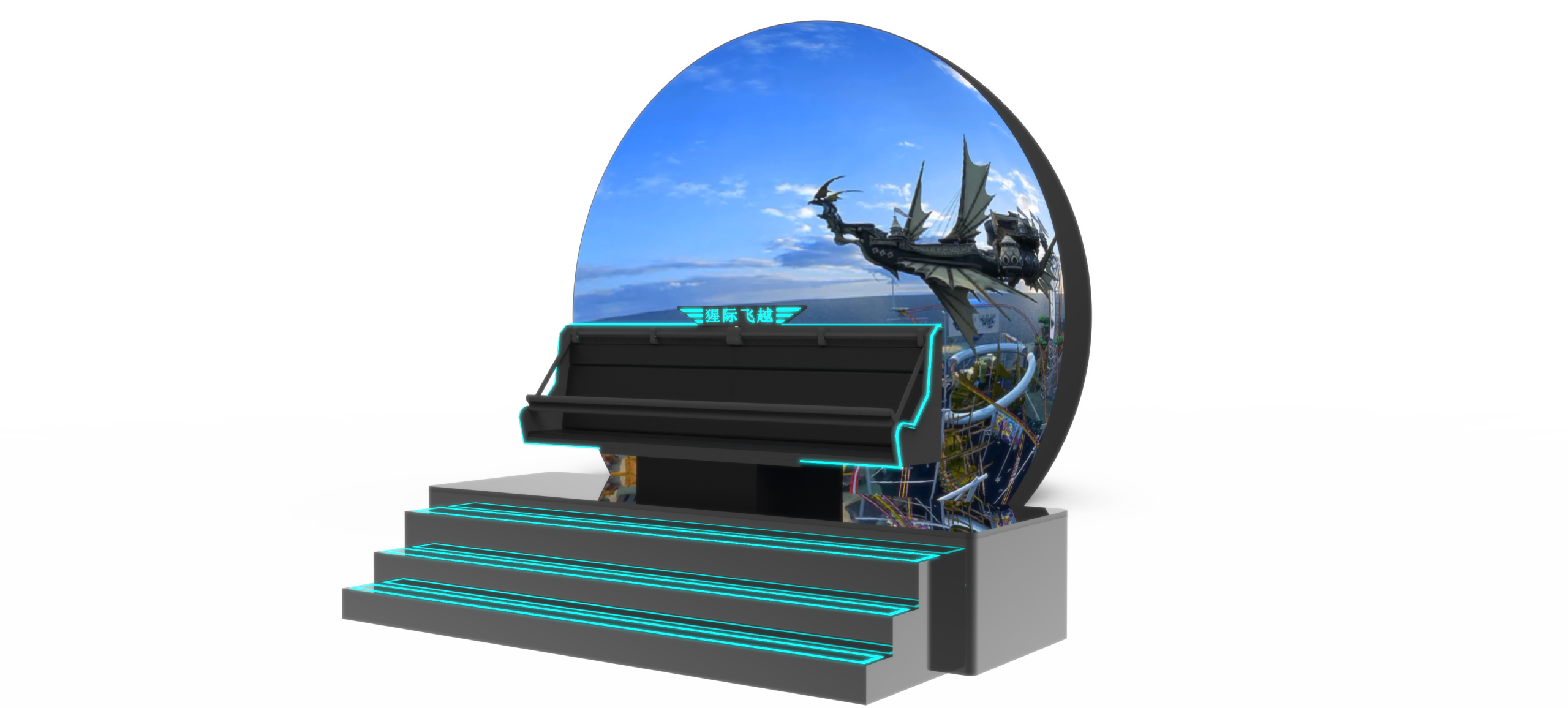
A Flying Theater is an immersive attraction that combines:
- Dome projection system (typically 160° FOV)
- Motion platform seating
- Environmental effects (wind, mist, snow, bubbles)
- Surround sound system
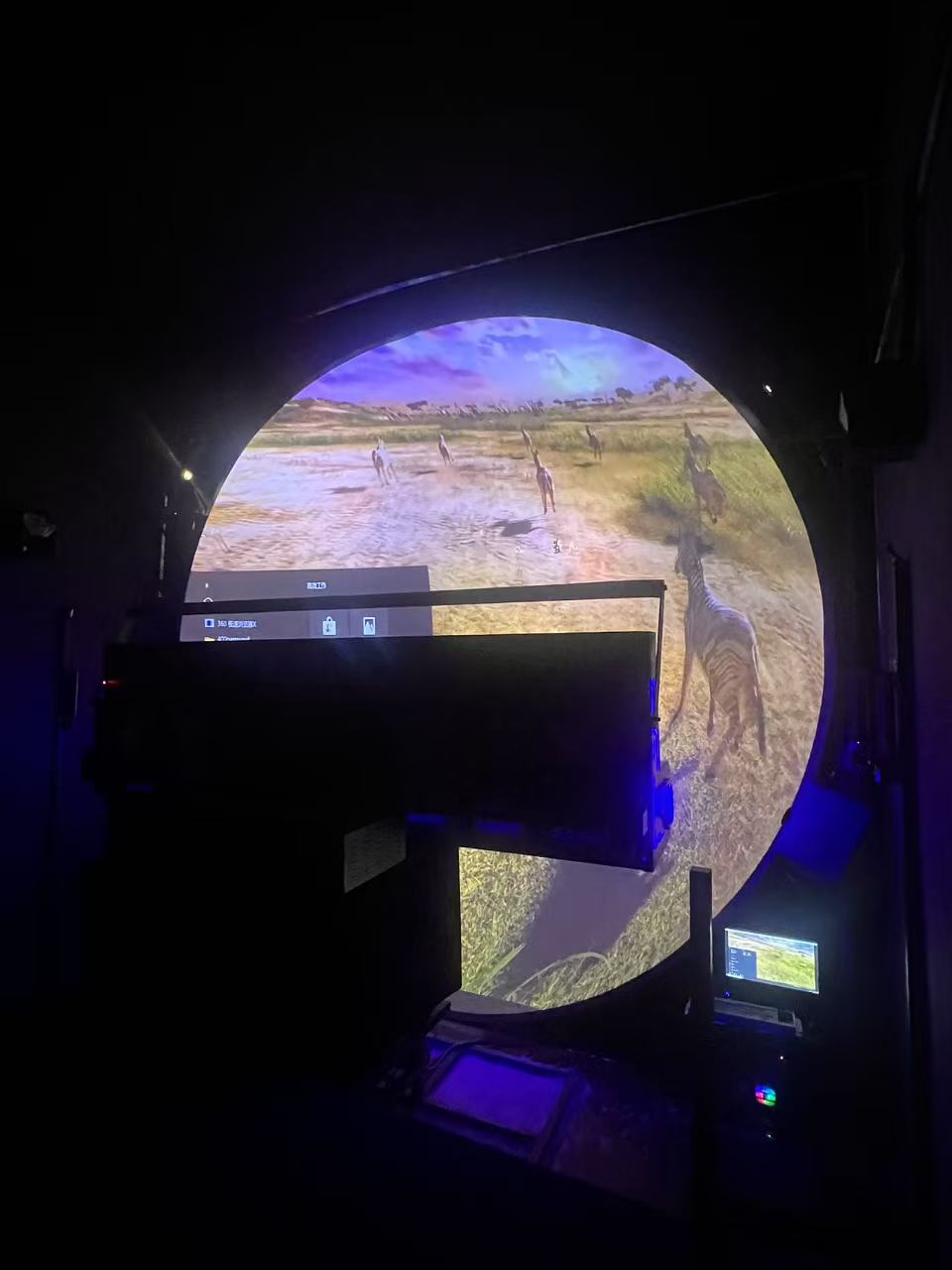
Guests sit on a suspended motion platform while watching a large dome projection. The seats tilt, rise, drop, and simulate flight movement synchronized with high-definition visuals.
Unlike a traditional cinema, a flying theater is not passive viewing — it is participatory immersion.
Unlike mechanical rides, flying theaters offer content upgradability. Films can be updated seasonally, increasing repeat visits and extending lifecycle value.
This content-driven model makes flying theaters highly suitable for shopping malls, mixed-use developments, and tourism destinations.
Is a Flying Theater Profitable? Revenue Model Breakdown
Let’s analyze a small 8-seat flying theater system, which is currently the most popular entry-level commercial model.
Hourly Revenue Calculation
Assumptions:
- 10 minutes per session (including loading/unloading)
- 6 sessions per hour
- 8 seats per session
- Ticket price: $4–$7 per person (typical mall pricing internationally)
Conservative Scenario ($4 per ticket):
6 × 8 × $4 = $192 per hour
Standard Scenario ($5 per ticket):
6 × 8 × $5 = $240 per hour
Premium Market Scenario ($7 per ticket):
6 × 8 × $7 = $336 per hour
This demonstrates strong scalability based on local purchasing power.
Daily Revenue Projection
Normal Weekend Operation
Assume 4 hours of peak full-capacity operation:
$240 × 4 = $960 (peak hours)
Including off-peak partial occupancy, total daily revenue typically ranges between:
$1,100 – $1,700 per day
Holiday / High Season Operation
Assume 6 hours of full-capacity operation:
$240 × 6 = $1,440 (peak hours only)
With additional off-peak sales:
$1,500 – $3,000 per day is achievable in strong locations.
In high-traffic malls or tourism cities, daily revenue may exceed these ranges.
Flying Theater Payback Period (ROI Timeline)
One of the most searched questions globally is:
What is the payback period of a flying theater?
Based on market case studies:
- Shopping mall projects: 5–8 months
- Tourist destinations: 6–10 months
- Moderate traffic areas: 8–12 months
Why is the flying theater ROI relatively fast?
1. High Turnover Rate
Each experience lasts only 8–10 minutes, allowing up to 6 cycles per hour. This high throughput model supports strong revenue density per square meter.
2. Stable Foot Traffic Model
Flying theaters rely on consistent mall foot traffic. Prime installation locations include:
- Central atrium zones
- Near escalators
- Adjacent to children’s entertainment areas
- Close to food courts
Stable traffic equals predictable revenue.
3. Renewable Content Model
Unlike mechanical rides, flying theaters can update films quarterly.
New films = repeat customers.
This increases lifetime customer value and reduces marketing cost over time.
How Much Does a Flying Theater Cost?
The investment cost of a dome flying theater depends on several variables:
- Number of seats (8 / 12 / 20 / 30)
- Projection brightness & resolution
- Motion platform technology
- Environmental effect systems
- Dome size & material
Small 8-Seat System (Entry-Level Commercial Model)
Typical international investment range:
$70,000 – $150,000 USD
(depending on configuration level)
This is significantly lower than large theme-park-grade flying theaters.
Additional Costs
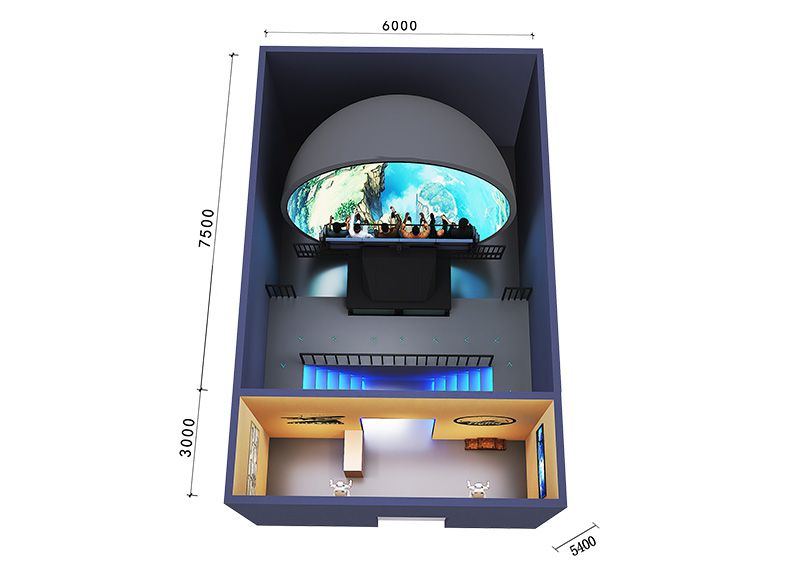
Interior Construction
- Black box interior treatment
- Themed facade design
Estimated cost:
$5,000 – $20,000 USD
Operating Costs
Main expenses include:
- Staff salaries
- Electricity
- Rent
There is typically:
- No revenue sharing
- No royalty fees
- No hidden commission model
The equipment is usually a one-time purchase.
Flying Theater Business Model
Revenue streams include:
- Single ticket sales
- Online group deals (Groupon-style platforms)
- Combo packages (family bundles)
- Holiday premium pricing
- Cross-promotion with mall tenants
The flying theater business model is:
High frequency + short duration + stable cash flow
Why 2025 Miniaturization Is a Turning Point
Before 2025:
Flying theaters required large-scale custom construction.
After 2025:
Compact dome designs allow installation in:
- Standard shopping malls
- Indoor amusement parks
- Medium-sized retail complexes
This dramatically reduces capital risk and expands market accessibility.
Who Should Invest in a Flying Theater?
Flying theaters are suitable for:
- Shopping mall operators
- Tourism attraction developers
- Indoor amusement entrepreneurs
- Family entertainment center owners
- Light-asset entertainment startups
Key advantages:
- Predictable ROI
- Scalable model
- Upgradable content
- High visual impact
- Strong social media appeal
Future Trends in Flying Theater Investment
The next evolution of flying theaters includes:
- Higher resolution laser projection
- Wider field-of-view dome systems
- Interactive AI-based content
- Localized tourism-themed films
- IP-branded flying experiences
As content improves, flying theater profitability potential increases.
Final Conclusion: Is a Flying Theater a Good Investment?
After analyzing:
- Is a flying theater profitable?
- How much does a flying theater cost?
- Flying theater ROI timeline
- Payback period structure
- Operating cost model
The conclusion is clear:
Flying theaters have transitioned from theme park exclusives to scalable, mall-compatible, standardized entertainment investment assets.
With:
- High turnover efficiency
- Strong daily revenue potential
- Renewable content strategy
- Predictable payback period
- Manageable investment threshold
Flying theaters represent one of the most attractive light-asset entertainment investment models in 2025 and beyond.
 mini dome flying theater