
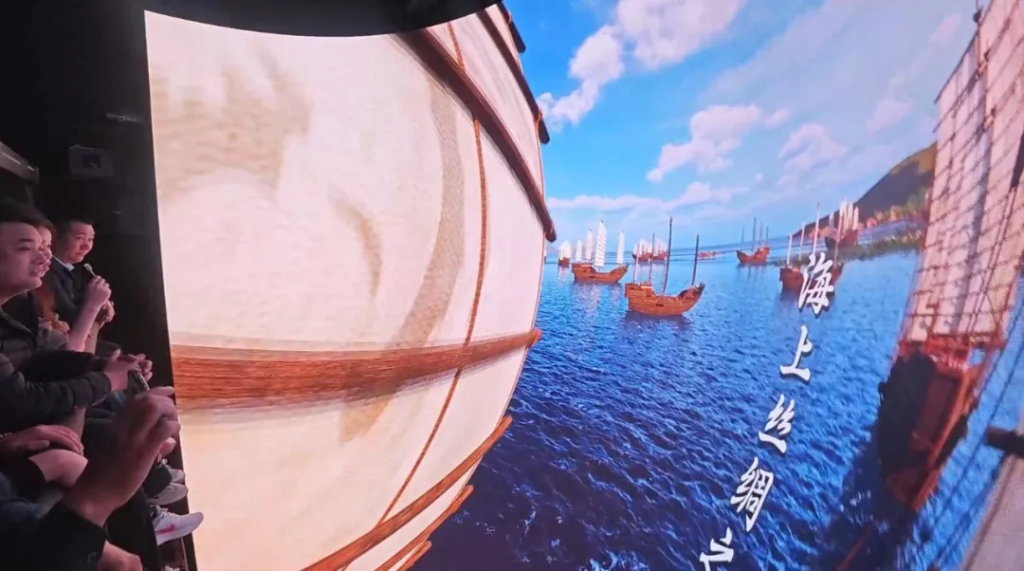
As a core format of immersive experiences in the cultural tourism industry, large-scale suspended flying theaters have become the “traffic code” for theme parks, provincial science museums, and large-scale cultural tourism complexes by virtue of their 360° wrapped visual impact and simulated flight physical sensations. The equipment investment accounts for the core proportion of the total project investment, usually accounting for more than 60%. The cost composition is not a single equipment purchase, but a comprehensive investment covering multiple systems such as core display, motion control, and audio-video linkage.
From the core LED dome to the motion seats that carry the experience, the specifications and technical levels of each module directly determine the overall cost range. We will perform a detailed disassembly of its core cost components.
Note: The following price data are for reference only, and the specific prices are subject to actual project requirements and equipment configurations.
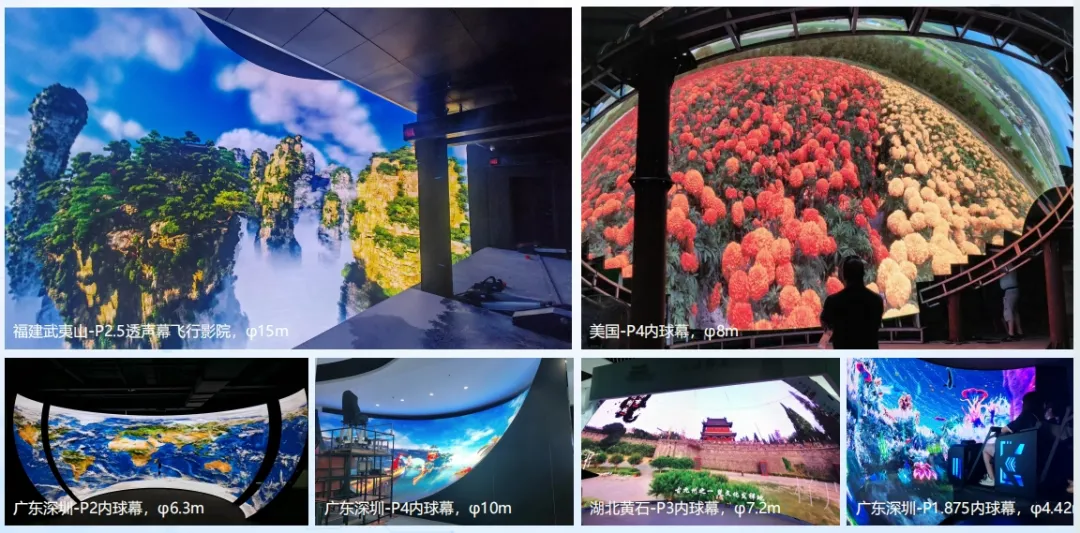
As the “visual core” of the flying theater, the LED dome is the single module with the highest proportion of equipment cost, usually accounting for more than 50% of the total equipment investment. Its cost difference is mainly determined by three major factors: size specifications, technical parameters, and customization requirements. For large-scale suspended flying theaters, the mainstream configuration is an acoustically transparent inner dome with a diameter of more than 15 meters, with a display area generally exceeding 300 $m^2$, and a basic cost range of $694,444 to $1,111,111. If high-end customization is involved, it can exceed $1,388,889.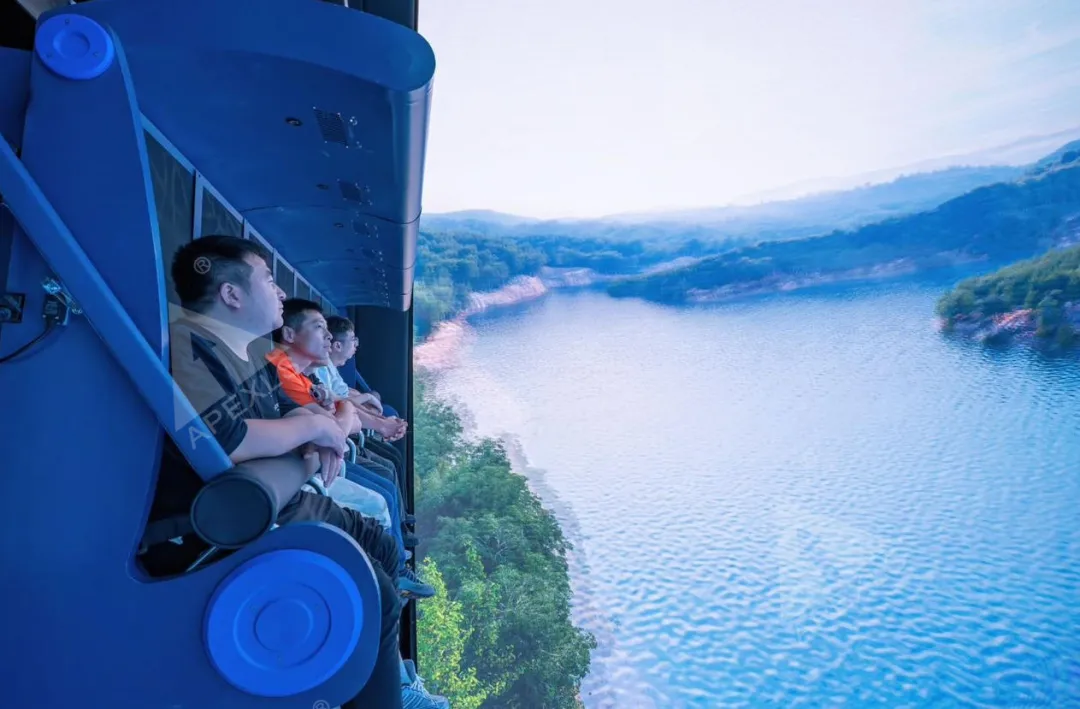
Specifically, size specifications are the basic determining factor of cost. Unlike small domes (5–10 meters in diameter, cost $111,111 to $416,667), large domes have strict requirements for screen area and structural strength because they need to cover more than 100 people watching at the same time. Their cost increases non-linearly with the diameter—for every 3 meters increase in diameter, the cost rises by about 30%–40%. For example, for an LED dome with a diameter of 20 meters, the cost of the screen material alone reaches about $1,111,111, which is an increase of more than 50% compared to the cost of a 15-meter diameter dome.
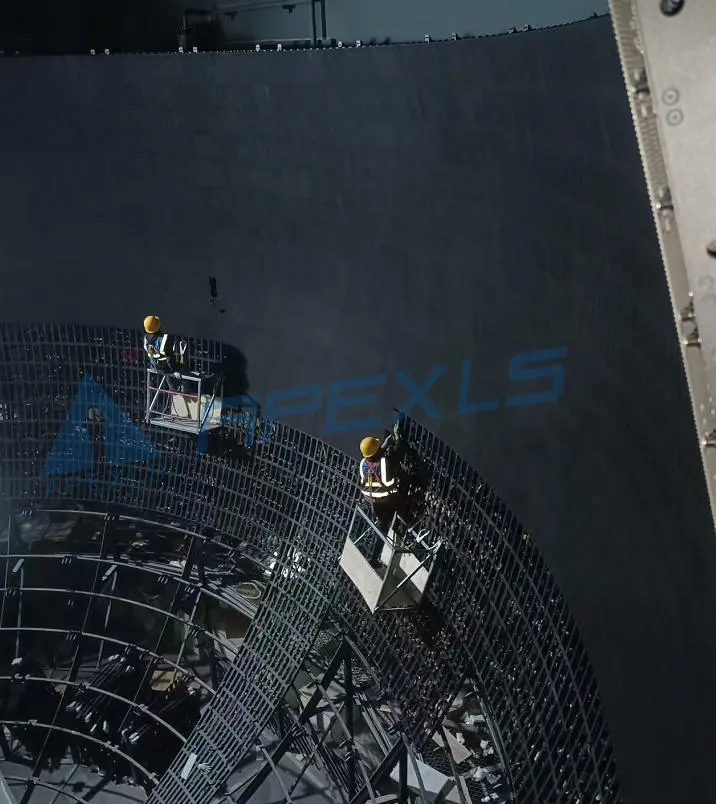
At the technical parameter level, pixel pitch, resolution, and refresh rate directly affect the cost level. Large-scale flying theaters generally use LED modules with P2.5–P3.0 specifications. The smaller the pixel pitch, the higher the picture delicacy and the cost also climbs. P2.5 modules cost $278 to $417 more per square meter than P3.0 modules. In terms of resolution, the cost gap between 4K basic configurations and 8K high-end configurations reaches 30%–50%. High-refresh-rate modules (above 3840Hz), which need to adapt to the picture synchronization requirements of motion scenes, cost more than 15% higher than ordinary refresh rate modules. In addition, large domes need to adopt an acoustically transparent module design, achieving sound penetration through precise perforation processes; this process will add an additional 10%–15% in processing costs.
Customization requirements are an important source of cost premium. The domes of large suspended flying theaters are mostly special-shaped structures, which need to adapt to the venue space and suspended seat layout, making it impossible to use standardized modules. At the same time, spherical calibration and thermal management system customization will increase additional investment of $27,778 to $69,444, which is one of the core reasons for the high cost of large domes.
As the core carrier of the “flight experience,” the motion seat is the second largest module of equipment cost, accounting for about 20%–30%. Its cost core depends on the degree of freedom (DOF) level, the number of seats, and linkage technology. Large suspended flying theaters are generally equipped with multi-DOF motion seats with more than 40 seats. The overall cost range is $138,889 to $277,778, and the cost per seat ranges from $3,472 to $6,944, far exceeding the simple seats of small theaters ($278 to $694 per seat).
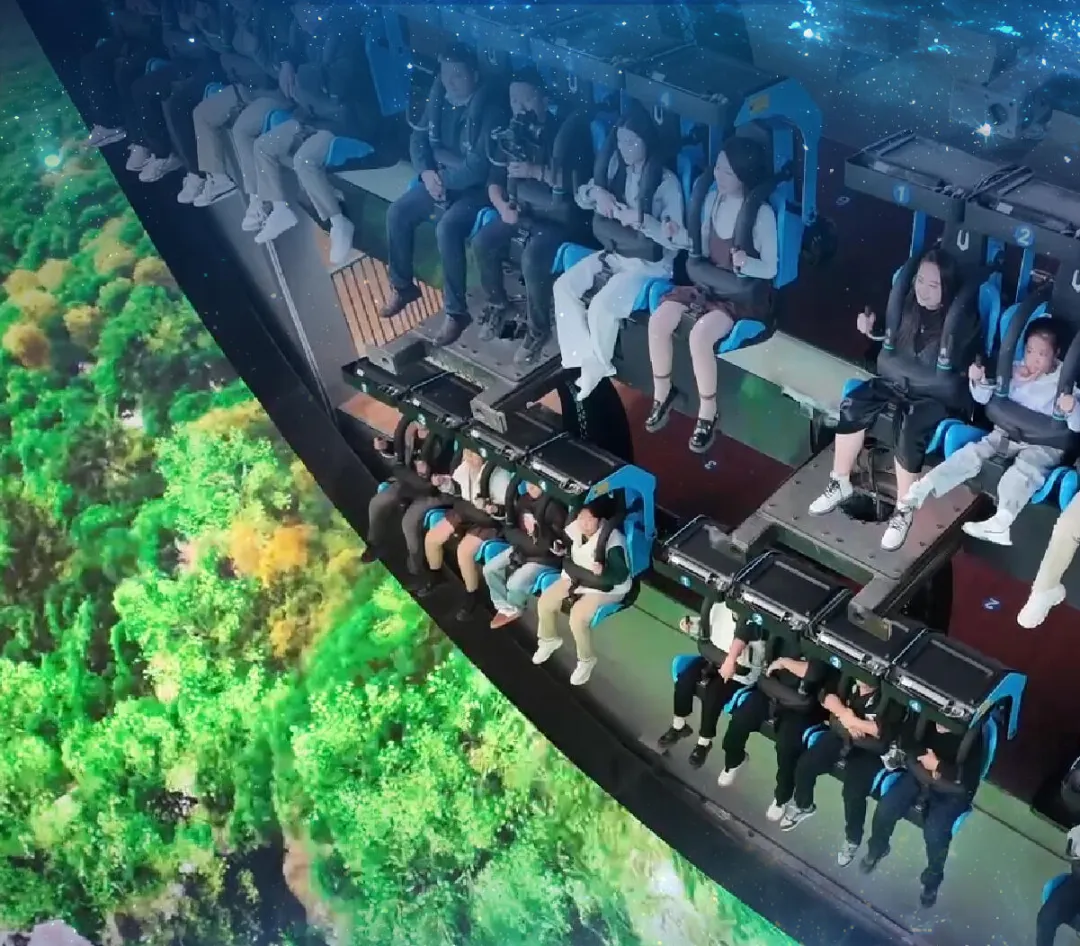
The degree of freedom level is the core difference point of motion seat costs. Large flying theaters mainly use 6-DOF seats to achieve movement switching in 12 directions such as pitch, tilt, and lift, and their cost is 50%–80% higher than 4-DOF seats. The core reason lies in the precision component investment of 6-DOF seats—each seat needs to be equipped with 6 high-precision electric cylinders (thrust 50N–20kN, repeated positioning accuracy $\pm 0.005\text{mm}$), grating scales, and six-axis force sensors. The cost of a single set of core drive components alone reaches $2,083, while the drive component cost of a 4-DOF seat is only about $1,111. In addition, the intelligent control algorithm of 6-DOF seats needs to support posture correction within 0.01 seconds, and the customized algorithm development fee adds an extra $13,889 to $27,778.
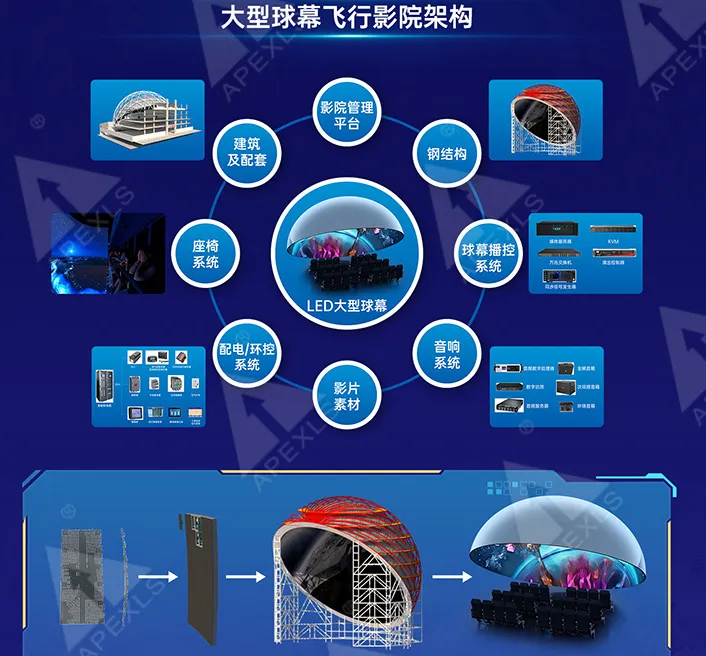
The number of seats and the design of the suspension structure further affect the cost. The seats of large flying theaters mostly adopt an overall suspended layout, requiring matching high-strength suspension tracks, load-bearing brackets, and safety protection systems. The suspension frame cost for 40 seats is about $41,667 to $69,444, and for every 10 additional seats, the frame cost increases by $11,111 to $16,667. At the same time, seat density design also affects the cost. High-density layouts need to optimize seat spacing and motion travel, with customized adjustment fees of about $6,944 to $13,889. It is worth noting that the safety redundancy design of suspended seats (such as dual braking systems) requires an additional investment of 15%–20% in cost to meet the strict safety operation standards of cultural tourism projects.
The linkage control module is a cost item that is easily overlooked. To achieve synchronization of seat movements with images and sound effects (synchronization error must be less than 20ms), dedicated linkage controllers and signal transmission systems must be configured, with a single system cost of about $11,111 to $20,833. For high-end projects, motion capture and feedback systems also need to be added to adjust the seat posture in real-time to match the viewing scene. This module will add an additional $20,833 to $41,667 in cost, but it can significantly improve the immersion experience and is one of the core competencies of high-end projects.
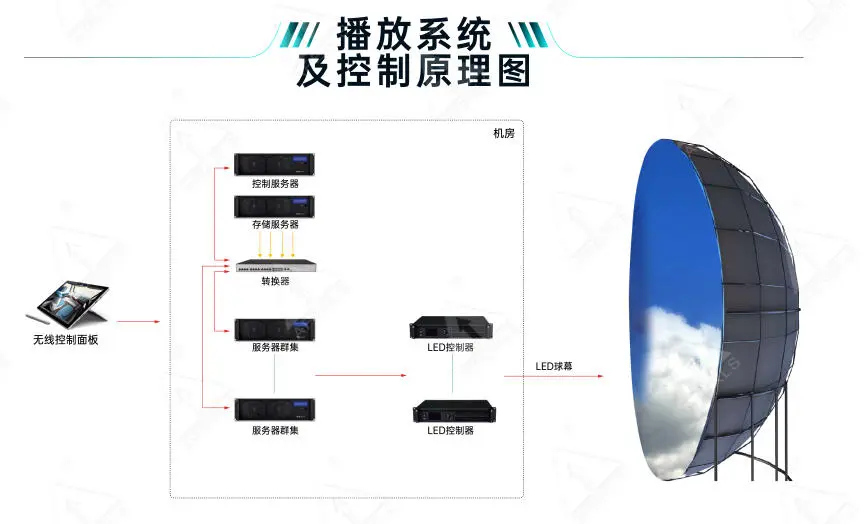
In addition to the two core modules of LED domes and motion seats, the investment in audio-video linkage systems, control systems, and supporting equipment, although relatively low in proportion (totaling 20%–30%), is the key to ensuring the integrity of the experience, and its cost composition is also highly professional.
 LED Dome
In terms of audio-video systems, large suspended flying theaters need to be equipped with professional-grade surround sound and film authorization systems. The sound system adopts 7.1.2 channels and above to achieve a 360° sound field wrap, with a basic cost of about $20,833 to $41,667. High-end customized sound systems (such as special speakers adapted to the dome sound field) can cost more than $69,444. Film authorization is a long-term investment. The authorization fee for a single original exclusive film is about $13,889 to $27,778, and 3–5 films need to be updated every year. The film procurement cost in the first year is about $41,667 to $138,889, and a special update budget needs to be reserved for each subsequent year.
As the “brain” of the entire equipment cluster, the control system accounts for about 8%–12% of the total equipment investment. The control system of a large flying theater needs to realize the collaborative linkage of dome display, motion seats, sound, and special effects (wind, mist). The basic linkage control system costs about $27,778 to $41,667. If advanced functions such as VR/AR fusion and multi-person collaborative interaction are involved, customized software systems need to be developed, and the cost will increase to $55,556 to $83,333. In addition, the debugging fee for the control system accounts for about 15%–20% of the system cost, requiring a professional technical team to carry out several weeks of joint debugging and optimization to ensure the synchronous operation of each system.
Supporting equipment and installation and commissioning costs are also not to be ignored. Supporting equipment includes safety monitoring systems, emergency braking devices, dedicated air conditioning for equipment rooms (for heat dissipation), etc., with a cost of about $27,778 to $55,556. In terms of installation and commissioning, the spherical calibration of large LED domes and the load-bearing testing and posture debugging of suspended seats require professional equipment and technical teams, with costs of about $41,667 to $83,333, accounting for about 10% of the total equipment investment. At the same time, some projects need to reserve 5%–10% of contingency costs to deal with venue adaptation adjustments, equipment upgrades, and other emergencies during the installation process.
Taken together, the core factors influencing the equipment cost of large suspended flying theaters can be summarized into three categories: first, the scale level. Large configurations with a diameter of more than 15 meters and more than 40 seats generally have equipment costs between $1,111,111 and $2,083,333, far exceeding small and medium-sized configurations ($416,667 to $833,333). Second, the technical level. High-end configurations (8K dome + 6-DOF seats + VR fusion) cost 50%–80% more than basic configurations (4K dome + 4-DOF seats). Third, the degree of customization. Customization requirements such as special-shaped structure adaptation and exclusive algorithm development will cause the cost to rise by an additional 10%–30%.
 LED Dome
Match the configuration according to the project positioning. Cultural tourism complexes and theme parks can prioritize the mainstream configuration of 6-DOF seats + 4K dome, balancing experience and cost-effectiveness.
Prioritize solutions based on standardized modules with partial customization to reduce material loss and development costs.
Pre-reserve 10%–15% of the equipment contingency budget and an annual maintenance budget (about 5%–8% of the equipment cost) to ensure the long-term stable operation of the project.
Overall, the equipment cost investment of a large suspended flying theater is essentially a balance between technical specifications and experience effects. From the visual presentation of the LED dome to the physical feedback of the motion seats, every cost expenditure is directly related to the final viewing experience. Only by accurately matching the project positioning and the needs of the target audience can the optimal balance between cost investment and operational income be achieved.